Narayana Murthy or NRN as he is affectionately known amongst Infoscions is undoubtedly one of the most successful and respected Indians.
Mr. Narayana Murthy was born on August 20, 1946 in Karnataka, India. He obtained his Bachelor of Electrical Engineering (B.E.) from University of Mysore in 1967 and joined IISc thereafter for ME in Electrical Engineering. He spent a month there, but somehow he was not excited about the course and returned home. Thereafter he did Master of Technology (M.Tech.) from Indian Institute of Technology (IIT), Kanpur. At the end of his course at IIT, Narayana Murthy got offers from companies like Telco, HMT, AMD, etc, but he choose IIMA in their computer department, although the salary there was lower than the industry had to offer. There he was actively involved in setting up the computer centre and developed a lot of software including India’s first basic Interpreter and Time-Sharing system. After spending there years at IIMA Narayana Murthy moved on joined a company named SESA in Paris. In Paris, NRN worked in a team that designed a 400-terminal, real time operating system for handling cargo at Charles de Gaulle airport. The three year stint at Paris between 1972-1975 was the only foreign assignment that Swadeshi Narayana Murthy ever took up.
On return from Paris, NRN joined the System Research Institute in Pune for two years before he left it to join Patni Computer System (PCS) in Bombay. He headed the software group at PCS. He had been there for about four years when he and six other colleagues at PCS established Infosys Technologies in Bangalore in 1981.
Started with a seed capital of $250 in 1981 Infosys now stands over $2 billion, over thirty thousand employees, development centres across the world.
Not withstanding the meteoric rise of Infosys the man behind the “Most admired company” remains as simple as before. Staying in a two bed-room flat in Jaya Nagar in Bangalore NRN has ensured his children also remain as modest as he and his wife Sudha Murthy. An interesting story happened when his daughter – working in one of the consulting firms abroad – was asked what his father does. She replied “He works in the Indian IT industry”, not that He is the Indian IT Industry!!
NRN analyses himself as a capitalist in mind and socialist at heart. Mahatma Gandhi and Lee Kuan Yew are the leaders who influenced him early in life for their simplicity and dynamism.
NRN attaches great importance to his employees. “It is our belief that the first duty of a corporation is to uphold the respect and dignity of the individual” says Narayana Murthy.
Another important factor Narayana Murthy believes in, is ‘leading by example’. He puts in long hours at work. He reached his office at 8:30 a.m. in the morning and remains there until around 8:30 p.m.
The chairman and CEO of Infosys Technologies (1998-99 sales: Rs 513 crore), heads India’s most successful Silicon Valley style start-up. Established in 1981 by seven professionals who pooled in their savings of Rs 10,000 (borrowed from their wives), Infosys has set all kinds of records. It was the first company to institute a company wide, performance based Employee Stock Option Plan that cut right across the hierarchy. This year, it was the first India-registered company to list on an American stock exchange (Nasdaq). On measures of transparency and corporate governance, Infosys is the epitome of the upright corporate citizen.
To Murthy goes the credit for first having the vision to see the opportunity in software, pick the right team and more significantly keep it together. The Infosys success is striking since all of its founders come from middle class backgrounds, had no backing of any business house but simply leveraged their brainpower and sweat equity. This is a model for the new generation of Indian enterprises in the coming millennium.
The fifth born of eight children, Murthy’s father was a modest school teacher in Mysore who could not afford to send his son to iit. Today, his 7.7% stake in Infosys makes Murthy a very wealthy man, with an estimated networth of Rs 2,500 crore. Yet he continues to cling to his roots, staying in a house in the middle class area of Jayanagar in Bangalore with his engineer wife Sudha and their two children, Akshata and Rohan.
What made you initially choose engineering as a
career?
My uncle was a civil servant and my father was very
keen that I take that up as a career but somehow it
didn’t appeal to me. Those were the days when
engineering was considered the in thing along with
medicine. People didn’t think that being an economist
or a social scientist could be a productive career.
I had got admission to the iit by passing the entrance
exam with a fairly high rank and a scholarship. But
the scholarship was to be disbursed at the end of the
year. I remember talking to my father who said that
there was no way he could afford to pay since he was
earning Rs 250 per month. He said: If you’re smart you
can go to any college and be able to do something
worthwhile. So I joined the local engineering college.
Did you have any role models who inspired you in your
career?
Those days our role models were our teachers, both in
school and university. They taught us to be
inquisitive and articulate. You have to imagine a
lower middle class family in a district headquarters
in the ’60s. My father used to tell us about the
importance of putting public good before private good;
mother would talk about sacrifice and truth. Beyond
the basic values of life they didn’t discuss too much
about our careers.
My dream was to become a junior engineer in a
hydroelectric power plant, Nehru’s temples of modern
India. What appealed to me was that they were
non-polluting and set in pristine surroundings. Also,
being an electrical engineer, there was this macho
thing about building a big generator. But as a
top-ranking student, people advised me to do my
masters. It was not easy for people like us from a
certain section of society that was considered already
advantaged to get a job in Karnataka because of the
reservation system and so I postponed the career
decision for two years by doing my masters.
So you finally made it to IIT; what was that
experience like?
IIT Kanpur was in its halcyon days. We had so many
young professors who had done their Ph.Ds in the US
and had come back to India. They were all in their 20s
and 30s and full of energy and optimism. Also, under
the Kanpur Indo-American programme, iit had links with
eight American universities like MIT, Berkeley,
Purdue. What that meant was that when MIT got an IBM
computer they sent one to Kanpur. We were introduced
to computers – that wonder machine – and I was hooked.
What prompted you to opt for the unconventional job
offer from IIM?
The phase I enjoyed the most was my time at iim
Ahmedabad where I took up a job as chief systems
programmer. In those days there were few computer
science graduates so we got five job offers each. I
had offers from hmt, ecil, Telco, Air India. The
salary in those places was much higher than at the
iim. But Prof. Krishnayya of iim who came to iit
Kanpur talked to me for an hour about this great,
modern mini- computer that he was going to install and
that iim would be the third business school in the
world to install a time-sharing system after Harvard
and Stanford. He also said that the atmosphere was
collegial, we’d work 20 hours a day and learn a lot.
Taking this job at a salary of Rs 800 a month was the
best decision of my life.
I learnt so many things from Krishnayya. He is
probably the person who influenced me the most. He
taught us how important it is to aspire. We used to
work 20 hours a day; go home at 3 a.m. sometimes and
be back at 7 a.m. There was so much opportunity to
learn. We designed and implemented a basic interpreter
for ecil. I learnt what it is to be an engineer. It
isn’t theory but application of the theory to solve
problems and make a difference to society.
You worked overseas early in your career. What did you
learn from your stint abroad?
My years in Paris were the most influential years of
my life. I observed how in a western country even the
socialists understood that wealth has to be first
created before it can be distributed. That there could
only be a few leaders to create wealth. And that it’s
the job of the government to create an environment
where it’s possible for people to create wealth. I
realised that all this talk of socialism as practised
in India was not meaningful. Our country treated
communism as an ism that was completely disassociated
from the reality of the context. You cannot distribute
poverty.
My father always told us that India had a lot to learn
from the West. Also, he was a great fan of classical
music. On Sundays, air used to play music for an hour.
One day I asked him: why should I listen to this alien
music? He said: What appeals to me is that in a
symphony there are over 100 people, each of whom is a
maestro, but they come together as a team to play
according to a script under this conductor and produce
something divine. They prove that one plus one can be
more than two. It’s a great example of teamwork.
What prompted your change of heart from being a
staunch leftist?
After my Paris stay, I donated my earnings and with
$450 in my pocket decided to return home overland. I
came to Nis, a border town between the then Yugoslavia
and Bulgaria to take the Sofia Express. I struck up
conversation with a girl in the compartment. After
about 45 minutes the train stopped, the police took
the girl away, ransacked my backpack, and put me in a
room that had no mattress and a window 10 ft high.
They kept me there for 60 hours after which they freed
me saying that since I was from a friendly country
they were letting me go. I felt that if this system
treats friends this way then I did not want anything
to do with it. This experience really shook me.
So the socialist in you became a committed capitalist?
I am a 100% free marketeer but I call myself a
compassionate capitalist. While I’m very conservative
in economic matters I’m very liberal about social
matters. But I have no illusions about socialism. In a
country like India, when we have to make capitalism an
attractive alternative to people, it is extremely
important for us to show tremendous compassion to the
less fortunate. That doesn’t mean that you should give
jobs to people who don’t deserve them or that you
should make less profits but wherever you can show
compassion you should.
What was the initial business plan of Infosys based
on?
We were very clear that we wanted to be in India.
There were many opportunities to settle outside but we
wanted to create an institution in India. We knew
there was hardly a market here, so we had to look at
the export market from day one. At that time we had no
idea how far it would go but our satisfaction comes
mainly from working with bright, smart and
hard-working young men and women.
Our first contract was from Databasics in New York. We
had worked with them at Patni Computer Systems but
they wanted to set up on their own software group in
India. We convinced them that we could do as good a
job. My colleagues left for the US to work on-site on
the project. I stayed back to set up the
infrastructure. We decided to import a computer so
that we could add value from India.
How easy or difficult was it in those days to get a
business like yours off the ground?
In those days it would take anywhere between 15 to 24
months to get a computer. We started in 1981 but our
first computer was installed only in February 1984.
Getting a loan was very difficult. We had worked out a
time-sharing deal with mico on the basis of which anz
did a project report. But anz refused to give us the
loan. Several other banks also turned us down. It was
just by chance on a flight that I happened to be
sitting next to K.S.N. Murthy of the Karnataka State
Industrial Investment and Development Corporation, and
we got our break. They redid the entire project report
over 14 hours a day for a week and got it sanctioned
in 15 days.
Right from day one our idea was to add value from
India. To do that we needed certain factor conditions
– computers, telephone lines. It took us a year to get
a phone in Bangalaore. There was a rule then that
higher priority was to be given to retired government
servants than businesses. We had a contract for
$3,50,000; in addition we would get an ibm compatible
machine on loan from our customer. All that they
insisted was that we have a telephone so that they
could contact us. The customer said: Look I understand
that you are a group of competent people, but if you
want to do it from India you must convince us that you
can establish a line of communication. So, much
against our desire, we had to ship the team out.
One has to go through all these experiences because it
makes you understand your own frailties and also helps
you develop respect for God. I’ve been extraordinarily
lucky in life. I’ve received much more from society
than I’ve given. I have many friends who are much
smarter, much more accomplished, but somehow life has
dealt me so many good cards that I can’t ascribe it to
anything other than God’s grace.
Did you ever at any point feel like giving up?
There came a time in 1990 when we were floundering. We
had offers to buy us out which my colleagues thought
we should consider since we weren’t making too much
headway. We had a 4-5 hour discussion and I could feel
the sense of despondency. So I pulled a fast one. I
said guys don’t worry, I’ll buy you out. I know it’s
going to be tough in this country but I have no doubt
that we’ll see light. In minutes, they all said that
we’re with you. From now onwards we will never discuss
the issue of closing down, getting tired or giving up.
This marathon will be restarted.
Leadership is about making what seems impossible,
possible; about changing the perception of what
reality is. The reality in India is dirty roads,
pollution, bad traffic, etc. Reality is what we make
it; it is for us to change. If you give confidence to
people they can achieve tremendous things. We have run
this company as professionally as any other
corporation in the world in terms of the principles of
corporate governance, in not using corporate resources
for personal conveniences, with respect for the
professional.
What was the turning point for Infosys?
Chance favours the prepared mind. Just as we got
determined to run the marathon with much greater
gusto, liberalisation happened. If there is one
company that symbolises all the good that came out of
liberalisation, it is Infosys. It did four things for
us: It enhanced the velocity of decision-making in
government. It used to take 8 to 12 months to get a
computer and the decision depended on the babu in
Delhi. After 1991, it wasn’t necessary to go to Delhi
for approvals. We could walk across to the Software
Technology Park here and get licenses in half a day
for $1 million.
Second, equity became a viable financing option.
Abolishing the Controller of Capital Issues had a
multiplier effect on Indian enterprises. Prior to
1991, an officer was charged with the authority to
decide at what premium a company went public and
generally he always looked at the past. But capital
markets are about the future. With low premiums, new
entrepreneurs were reluctant to approach the capital
markets. Once the company and lead manager were
allowed to decide the premium, that set us free.
The government also liberalised the rbi rules for
current account transactions. This meant that it was
easy to travel abroad, establish offices and get
consultants. Prior to 1991, we had to make an
application to rbi which could take 5 to 10 days.
Today I can travel in the next 6 hours. So it’s a big
change.
The most important thing is that government reversed
the policy of foreign investment and allowed 100%
ownership for mncs. This is the main reason why
Infosys came up. At the time many hi-tech companies
came in and that created competition, not in the
marketplace but for our human resources. People told
me that Murthy your game is up, all your people will
leave.
We could react in three ways: that this is our karma.
We’ll grow but not much – the Hindu philosophy. The
second alternative was to lobby the government not to
permit 100% ownership by mncs. As president of
Nasscom, I could have kept all these guys out. But
that was against my fundamental philosophy. The third
was to find out why our youngsters would want to leave
us and see if we could create those conditions in
Infosys.
A successful corporation is one that introspects about
internal transformation first before blaming the
context, competition or external circumstances.
Everyone bought into this philosophy and how we could
bring about a fundamental transformation. We increased
our salaries, we introduced a stock option plan so
that our people would have much more money than any
other Indian mnc. We also decided to make it a fun
place to work because our assets walk out of the door
every evening mentally and physically tired. We must
make sure that they come back with a zest to work.
I am a firm believer that this country has a lot to
learn from the West. We have to be open-minded, learn
all the good things from them, and become stronger.
For me a democracy is one where people put public good
before private good; where responsibilities come
before the rights.
What has kept the Infosys team together through all
these years?
How do we stay together? We have unwritten rules.
Everybody knows that if we want to work as a team we
have to be transaction based. We start every
transaction on a zero base. It is perfectly feasible
for us to disagree on a transaction but we start the
next transaction without any bias. Only an argument
that has merit wins; it has nothing to do with
hierarchy. Disagreeing is in the nature of things.
When you bring a set of people who have respect for
each others’ competence in certain areas and you’re
transaction-oriented then it can work as it has in our
case.
Our value system was like the British Constitution –
it was all unwritten but extremely well practiced. If
I were to have another opportunity to found another
company, I would never ask for anyone else – these are
truly remarkable people. Our value system is the true
strength of Infosys. Besides, we have complementary
skills. For example, I have an eye for detail and am
comfortable with balance sheets and numbers. Then I
can also get into the big picture. Nandan has a great
ability to communicate and get himself connected to
networks; his thinking is very strategic. Raghavan is
a good people manager. Gopal is the best among us in
technology. Shibulal and Dinesh are great on projects
– so there’s a complementarity of skills
What do you think was your best business decision?
Well, I think the best business decision was to
introspect. We will press on the pedal. We will
compete with the best of the multinationals in terms
of retaining people, in terms of creating a brand
equity. I think if you ask me what distinguishes
Infosys from many other companies, it is the
following: We have a very strong value system. In
fact, when I address new hires the main thing I talk
to them about is the value system. I tell them that
even in the most fierce competitive situation they
must never talk ill of customers. For heaven’s sake
don’t short change anybody. Never ever violate any law
of the land. It is better to lose a billion dollars
than a good night’s sleep. It is a true meritocracy.
Raghavan’s two children are engineers but they did not
come here to ask for a job. They worked elsewhere
before they went to the US to do their mba. It is our
responsibility to maintain the dignity of
professionals here.
The second thing that’s unique about Infosys is that
we have accepted that speed and imagination are the
only two context-invariant and time-invariant
parameters for success. We don’t think that we have
any extraordinary legacy/strength that will carry us
through the years. If we continue to innovate and to
adapt then we will survive or else we’ll disappear
like dew on a summer morning. So there’s a sense of
paranoia and a certain fear that tomorrow we may not
get food on the table if we don’t satisfy our
customers. We don’t think anything is given to us.
We’re as good as our last quarterly result. If we
don’t do well in the next quarter, we’ll be wiped out.
So far Infosys has grown organically. Are you looking
at acquisitions as a future growth strategy?
Indeed. Adding 50% to $500 million is so much more
difficult than adding 50% to $100 million. We are
looking at acquisitions though we haven’t identified
any company yet. We want to look at a group/company
that will add to the top line immediately but will
also add to the bottomline in the medium term. Ideally
it should be a small company, so that the
cross-cultural issues can be handled more easily.
Third, it must have an intellectual property right,
either in the form of a methodology or a tool or
processes which can be scaled up across Infosys for
improving productivity in an emerging area like
e-commerce, crm etc. Finally, it could also be an aged
technology product which has fallen on bad days but
one that has a captive customer base. We can take that
and enhance it technologically because we have the
strength here to do that. And because there’s a
captive customer base it’s much easier to sell. In any
product, selling to the first 20 customers is the
hardest.
Many feel that software companies are riding the boom
in demand for y2k remedial work. What will be Infosys’
life after y2k?
We will continue be a software services company
because as technology changes rapidly, companies will
want to leverage the internet for gaining competitive
advantage. There will be tremendous opportunities for
companies like Infosys to re-engineer existing
systems, enhance functionality. But the fundamental
strength will have to be learnability of experience.
That is, how quickly you understand a new paradigm, a
new technology and apply it to bring business benefit
to customers. As long as learnability is alive and
kicking at Infosys, we will have no problems about our
future.
What are the big challenges facing you?
We have to put in systems, processes and tools to
leverage technology to enhance the quality and
productivity of our people. If today we take 100 hours
to do something, then next year we should take 95
hours. Second, we must learn to manage growth. Inspite
of recruiting larger numbers we should operate as a
small, close knit, nimble company. That’s the task of
this management.
My vision is to make Infosys a globally respected
software corporation, delivering best of breed
solutions employing best in class professionals.
That’s different from an mnc which generally has
subsidiaries in different countries, manufactures and
sells there. As a corollary to that, I want it to be a
place where people of different nationalities,
religions and races will come together and compete in
an environment of harmony and meritocracy. We believe
that the local people are the best people in a given
environment.
What are the challenges that the software sector faces
in the new millennium?
One, we have to create corporate brand equity and
product/services brand equity outside India. Indian
industry’s record of doing this has been pathetic. We
have to become multicultural as local people are most
effective in a local environment. And we have to learn
to operate in a multicultural environment. We have few
examples of Indian companies successfully doing so.
The most difficult challenge is recruiting, enabling,
empowering and retaining the best and brightest
talent. Enhancing per capita revenue productivity and
moving up the value chain is the next big challenge
because our costs are going up in India. Unless we do
this, our success won’t survive in the long run.
Will Infosys move up the value chain to become a
product company in the future?
Our profitability and margins are the best in the
services industry. Compare us with anybody on Nasdaq.
The net income margin of Infosys is as good as any
product company with the exception of Microsoft. It’s
not necessary to transform ourselves into a product
company. In fact, in the Net economy it is services
companies like Amazon.com, Priceline, eBay that have
been growing. I’m not worried about traditional
thinking that one must have a product. Infosys has
enhanced its per capita productivity at least 10% in
last five years. We are positioned to continue to be
profitable.
Does government have a role to play in the it sector?
One view is that it has grown because the government
has been hands-off and now that an it ministry has
been set up it could pose a roadblock. What is your
view?
The government has a role in creating a context for
Indian entrepreneurs to succeed. They should
concentrate on a policy regime and not a case-by-case
syndrome. If decisions of corporations are not taken
in boardrooms but in some government office then we
won’t go anywhere. Our company has been at the leading
edge in pushing the policy regime. When we got listed
on Nasdaq we required a policy regime. We need the
cooperation of government as we move forward.
What opportunity does the growing power of the
Internet pose for your company?
Internet is a great phenomenon particularly for a
country like India because it has meant the death of
distance. It has brought the anywhere, anytime
paradigm. In a large resource scarce country like
India, it is going to play a crucial role in ensuring
that both business to business and business to
customer benefits accrue much faster to both industry
and consumers.
Thanks to the emergence of companies like Amazon, the
traditional companies have realised that they have to
shape up or ship out. So there’s a tremendous emphasis
on leveraging the power of the internet. We understand
online transaction processing very well – we have done
it for 18 years. E-commerce requires the ability to
mount a robust and secure an online transaction
processing engine, a certain application layer. The
only difference is that you have to create a
user-friendly web front end which skill we’ve
developed in the last 2-3 years. We have a big
advantage of over new e-commerce companies because the
design and implementation of a high performance engine
is something we’ve been doing for years. US
corporations are in a hurry to get on to the e-comerce
bandwagon and this is a clear opportunity for us.
The stockmarket seems to have discovered the worth of
it and infotech stocks are seeing ever rising
valuations. How do you react to this?
I tell my colleagues not to look at the stockmarket.
What we should worry about day after day is to provide
quality products on time, within budget to our
customers. We must show transparency to investors, not
violate any law of the land, and be in harmony with
society. That’s our main charter and we should stick
to it. The stockmarket may or may not reward us even
if we do that. This is ephemeral. We should not be too
ecstatic about it today or get despondent if it falls
tomorrow.
People say that the intellectual elite of India is now
in Silicon Valley. What is your view?
Twenty years ago if someone had asked me whether
Indians should go abroad, I would have said No. Today
I have a completely different view. The need of the
country today is to create a good brand equity of the
country. That will be created by high quality Indians
in some numbers establishing themselves abroad. I
don’t feel bad about it. If some people go we should
cheer them, applaud them, make them feel welcome, and
give them emotional support. Because they are doing a
great job of enhancing the equity of India.
It’s very easy to sit in India and say Mera Bharat
Mahaan. Economic power is the only thing that counts
in today’s word. We have to create an image in the
minds of foreigners that Indians can do it. In fact,
that has already happened in the Valley. If an Indian
is involved in a venture, then the venture capitalist
will look positively at it. We have to convert this
country so that we not only retain people here but
also attract some of them back.
What advice would you give to the next generation of
entrepreneurs?
Early to bed and early to rise and work like hell.
Those people who have entrepreneurial strengths need
to get a marketable idea and understand the window of
opportunity for it. They have to bring together a team
that has mutually exclusive, but collectively
exhaustive skills and work out a value system.
Entrepreneurship is about running a marathon, not a
100 metre dash.
What does money mean to you?
Beyond a certain level of comfort I think one’s wealth
should be seen as an opportunity to make a difference
to society. My colleagues think so too. The power of
money is the power to give. Obviously it will have to
be done in a gradual manner over the years, but
there’s no doubt that a majority of what we have will
be given to public causes.
What drives you then if not money?
There’s a saying in America that the reward for
winning a pinball game is to get a chance to play the
next one. In most situations, the pleasure comes from
the journey, not the destination.
Monday, March 13, 2006
NR Narayana Murthy interview
Inspirations
This is taken from Guy Kawasaki's blog "Let the Good Times Roll".
Guy Kawasaki was one of the original Apple Computer employees responsible for marketing of the Macintosh in 1984. He is noted for bringing the concept of evangelism to the high-tech business. Kawasaki was a former Apple Fellow, and after leaving the company, became CEO of a pseudo-spinoff of Apple's called ACIUS, which produced the 4th Dimension database program. He also started the company Fog City Software.He is currently CEO of Garage Technology Ventures (garage.com), which helps high-technology startup firms in Silicon Valley, California.(source -wikipedia)
He is author of eight books including:
- The Art of the Start
- The Computer Curmudgeon
- The Macintosh Way
- Selling the Dream
- How to Drive Your Competition Crazy
- Rules for Revolutionaries
- Hindsights
- Database 101
Speaking to you today marks a milestone in my life. I am fifty years old. Thirty-two or years ago, when I was in your seat, I never, ever thought I would be fifty years old.
The implications of being your speaker frightens me. For one thing, when a fifty year old geezer spoke at my baccalaureate ceremony, he was about the last person I'd believe. I have no intention of giving you the boring speech that you are dreading. This speech will be short, sweet, and not boring.
I am going to talk about hindsights today. Hindsights that I've accumulated in the thirty-two years from where you are to where I am. Don't blindly believe me. Don't take what I say as “truth.” Just listen. Perhaps my experience can help you out a tiny bit.
I will present them ala David Letterman. Yes, fifty year old people can still stay up past 11:00 pm.
#10: Live off your parents as long as possible.
I was a diligent Oriental in high school and college. I took college-level classes and earned college-level credits. I rushed through college in 3 1/2 years. I never traveled or took time off because I thought it wouldn't prepare me for work and it would delay my graduation.
Frankly, I blew it.
You are going to work the rest of your lives, so don't be in a rush to start. Stretch out your college education. Now is the time to suck life into your lungs-before you have a mortgage, kids, and car payments.
Take whole semesters off to travel overseas. Take jobs and internships that pay less money or no money. Investigate your passions on your parent's nickel. Or dime. Or quarter. Or dollar. Your goal should be to extend college to at least six years.
Delay, as long as possible, the inevitable entry into the workplace and a lifetime of servitude to bozos who know less than you do, but who make more money. Your parents and grand parents worked very hard to get you and your family to this point. Do not deprive them of the pleasure of supporting you.
#9 Pursue joy, not happiness.
This is probably the hardest lesson of all to learn. It probably seems to you that the goal in life is to be “happy.” Oh, you maybe have to sacrifice and study and work hard, but, by and large, happiness should be predictable.
Nice house. Nice car. Nice material things.
Take my word for it, happiness is temporary and fleeting. Joy, by contrast, is unpredictable. It comes from pursuing interests and passions that do not obviously result in happiness.
Pursuing joy, not happiness will translate into one thing over the next few years for you: Study what you love. This may also not be popular with parents. When I went to college, I was “marketing driven.” It's also an Oriental thing.
I looked at what fields had the greatest job opportunities and prepared myself for them. This was stupid. There are so many ways to make a living in the world, it doesn't matter that you've taken all the “right” courses. I don't think one person on the original Macintosh team had a classic “computer science” degree.
You parents have a responsibility in this area. Don't force your kids to follow in your footsteps or to live your dreams. My father was a senator in Hawaii. His dream was to be a lawyer, but he only had a high school education. He wanted me to be a lawyer.
For him, I went to law school. For me, I quit after two weeks. I view this a terrific validation of my inherent intelligence. And when I quit, neither of my parents were angry. They loved me all just the same.
#8: Challenge the known and embrace the unknown.
One of the biggest mistakes you can make in life is to accept the known and resist the unknown. You should, in fact, do exactly the opposite: challenge the known and embrace the unknown.
Let me tell you a short story about ice. In the late 1800s there was a thriving ice industry in the Northeast. Companies would cut blocks of ice from frozen lakes and ponds and sell them around the world. The largest single shipment was 200 tons that was shipped to India. 100 tons got there unmelted, but this was enough to make a profit.
These ice harvesters, however, were put out of business by companies that invented mechanical ice makers. It was no longer necessary to cut and ship ice because companies could make it in any city during any season.
These ice makers, however, were put out of business by refrigerator companies. If it was convenient to make ice at a manufacturing plant, imagine how much better it was to make ice and create cold storage in everyone's home.
You would think that the ice harvesters would see the advantages of ice making and adopt this technology. However, all they could think about was the known: better saws, better storage, better transportation.
Then you would think that the ice makers would see the advantages of refrigerators and adopt this technology. The truth is that the ice harvesters couldn't embrace the unknown and jump their curve to the next curve.
Challenge the known and embrace the unknown, or you'll be like the ice harvester and ice makers.
#7: Learn to speak a foreign language, play a musical instrument, and play non-contact sports.
Learn a foreign language. I studied Latin in high school because I thought it would help me increase my vocabulary. It did, but trust me when I tell you it's very difficult to have a conversation in Latin today other than at the Vatican. And despite all my efforts, the Pope has yet to call for my advice. Latin has proven to be very valuable, but a “live” language would be nice too.
Learn to play a musical instrument. My only connection to music today is that I was named after Guy Lombardo. Trust me: it's better than being named after Guy's brother, Carmen. Playing a musical instrument could be with me now and stay with me forever. Instead, I have to buy CDs at Tower.
I played football. I loved football. Football is macho. I was a middle linebacker--arguably, one of the most macho position in a macho game. But you should also learn to play a sport like hockey, basketball, or tennis. That is, a sport you can play when you're over the hill.
It will be as difficult when you're 50 to get twenty-two guys together in a stadium to play football as it is to have a conversation in Latin, but all the people who wore cute, white tennis outfits can still play tennis. And all the macho football players are sitting around watching television and drinking beer.
#6: Continue to learn.
Learning is a process not an event. I thought learning would be over when I got my degree. It's not true. You should never stop learning. Indeed, it gets easier to learn once you're out of school because it's easier to see the relevance of why you need to learn.
You're learning in a structured, dedicated environment right now. On your parents' nickel. But don't confuse school and learning. You can go to school and not learn a thing. You can also learn a tremendous amount without school.
#5: Learn to like yourself or change yourself until you can like yourself.
I know a forty year old woman who was a drug addict. She is a mother of three. She traced the start of her drug addiction to smoking dope in high school.
I'm not going to lecture you about not taking drugs. Hey, I smoked dope in high school. Unlike Bill Clinton, I inhaled. Also unlike Bill Clinton, I exhaled.
This woman told me that she started taking drugs because she hated herself when she was sober. She did not like drugs so much as much as she hated herself. Drugs were not the cause though she thought they were the solution.
She turned her life around only after she realized that she was in a downward spiral. Fix your problem. Fix your life. Then you won't need to take drugs. Drugs are neither the solution nor the problem.
Frankly, smoking, drugs, alcohol--and using an IBM PC--are signs of stupidity. End of discussion.
#4: Don't get married too soon.
I got married when I was thirty two. That's about the right age. Until you're about that age, you may not know who you are. You also may not know who you're marrying.
I don't know one person who got married too late. I know many people who got married too young. If you do decide to get married, just keep in mind that you need to accept the person for what he or she is right now.
#3: Play to win and win to play.
Playing to win is one of the finest things you can do. It enables you to fulfill your potential. It enables you to improve the world and, conveniently, develop high expectations for everyone else too.
And what if you lose? Just make sure you lose while trying something grand. Avinash Dixit, an economics professor at Princeton, and Barry Nalebuff, an economics and management professor at the Yale School of Organization and Management, say it this way:
“If you are going to fail, you might as well fail at a difficult task. Failure causes others to downgrade their expectations of you in the future.
The seriousness of this problem depends on what you attempt.”
In its purest form, winning becomes a means, not an end, to improve yourself and your competition.
Winning is also a means to play again. The unexamined life may not be worth living, but the unlived life is not worth examining. The rewards of winning--money, power, satisfaction, and self-confidence--should not be squandered.
Thus, in addition to playing to win, you have a second, more important obligation: To compete again to the depth and breadth and height that your soul can reach. Ultimately, your greatest competition is yourself.
#2: Obey the absolutes.
Playing to win, however, does not mean playing dirty. As you grow older and older, you will find that things change from absolute to relative. When you were very young, it was absolutely wrong to lie, cheat, or steal. As you get older, and particularly when you enter the workforce, you will be tempted by the “system” to think in relative terms. “I made more money.” “I have a nicer car.” “I went on a better vacation.”
Worse, “I didn't cheat as much on my taxes as my partner.” “I just have a few drinks. I don't take cocaine.” “I don't pad my expense reports as much as others.”
This is completely wrong. Preserve and obey the absolutes as much as you can. If you never lie, cheat, or steal, you will never have to remember who you lied to, how you cheated, and what you stole.
There absolutely are absolute rights and wrongs.
#1: Enjoy your family and friends before they are gone.
This is the most important hindsight. It doesn't need much explanation. I'll just repeat it: Enjoy your family and friends before they are gone. Nothing-not money, power, or fame-can replace your family and friends or bring them back once they are gone. Our greatest joy has been our baby, and I predict that children will bring you the greatest joy in your lives--especially if they graduate from college in four years.
And now, I'm going to give you one extra hindsight because I've probably cost your parents thousands of dollars today. It's something that I hate to admit too.
By and large, the older you get, the more you're going to realize that your parents were right. More and more-until finally, you become your parents. I know you're all saying, “Yeah, right.” Mark my words.
Remember these ten things:
if just one of them helps you helps just one of you, this speech will have been a success:
- Live off your parents as long as possible.
- Pursue joy, not happiness.
- Challenge the known and embrace the unknown.
- Learn to speak a foreign language, play a musical instrument, and play non-contact sports.
- Continue to learn.
- Learn to like yourself or change yourself until you can like yourself.
- Don't get married too soon.
- Play to win and win to play.
- Obey the absolutes.
- Enjoy your family and friends before they are gone.
Thursday, March 09, 2006
Billionaire College Dropouts
Are college dropouts more successful than people with good education? It would seem so if you consider that many billionaires are people who dumped college. However, what this hides is the fact that although millions quit studies before completing them, very few of them go on to become rich.
What the list of the super-rich dropouts signifies is that in business, a top degree is not as important as having the right aptitude, attitude, determination and vision.
Here are some dropouts who went on to become billionaires:
Bill Gates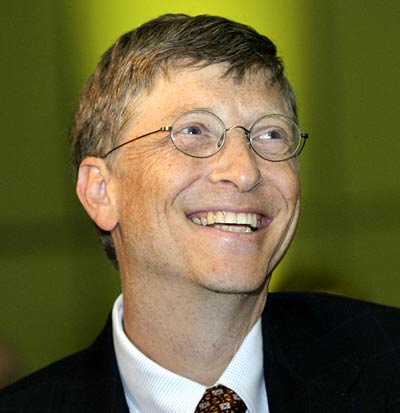
William Henry Gates III (1955-), along with Paul Allen, co-founded Microsoft Corporation, the world's largest software maker. Bill Gates, the wealthiest person in the world with an estimated net worth of $48 billion (Rs 211,200 crore!), is probably the best-known college dropout.
Gates attended an exclusive prep school in Seattle, went on to study at Harvard University, then dropped out to pursue software development. As students in the mid-70s, he and Paul Allen wrote the original Altair BASIC interpreter for the Altair 8800, the first commercially successful PC.
In 1975, Micro-Soft - later Microsoft Corporation - was born. Three decades on, Gates has been Number One on the Forbes 400 for over a dozen years. And here's something you probably didn't know: The Bill & Melinda Gates Foundation currently provides 90 per cent of the world budget for the attempted eradication of polio.
Paul Allen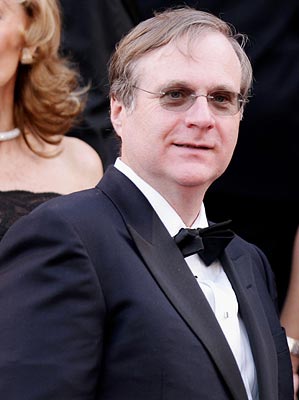
You can't help being among the world's wealthiest folk if, like Paul Gardner Allen (1953-), if you happen to co-found Microsoft. Forbes, in 2005, ranks Allen as the seventh richest, worth an estimated $21 billion!
Born in Seattle, Allen befriended Bill Gates while in school. Both shared an enthusiasm for computers, and would regularly sneak into University of Washington labs to work on projects. They were eventually caught, but managed an agreement with administrators by providing free computer help to students who needed it.
Allen attended Washington State University, dropping out two years later to write software. He also convinced Gates to drop out of Harvard, to found the company that would make them famous.
A year ago, Allen was back in the news for funding the SpaceShipOne sub-orbital commercial spacecraft. As always, the sky continues to be the limit.
Henry Ford
Founder of the Ford Motor Company, Henry Ford (1863-1947) is better known for his hand in creating the American middle class.
He managed this by applying the concept of assembly line manufacturing to the mass production of affordable cars, promptly revolutionizing industrial production.
Born to Irish immigrants, Henry was the eldest of six children. He left home at 16 to work as an apprentice machinist, married, tried a bit of farming, ran a sawmill, experimented with internal combustion engines and eventually formed the Detroit Automobile Company with a few other investors.
When the company went bankrupt, he formed the Henry Ford Company, but was forced out by investors. He returned with the Ford Motor Company.
Even if you aren't a fan of the fabulous Model T, here's something everyone should thank Ford for. In 1926, he instituted the five-day, 40-hour work week. And the modern weekend was born.
Andrew Carnegie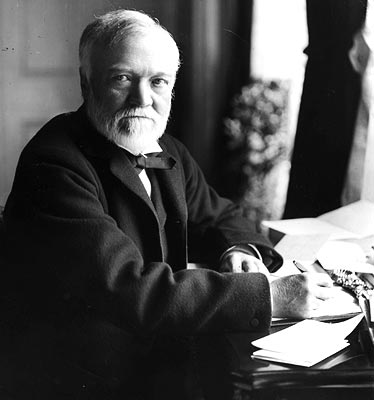
Industrialist and philanthropist, Andrew Carnegie (1835-1919) is better known, today, as the steel tycoon who started over 2,800 libraries. His rags-to-riches tale is also among the most famous in American history.
After moving to Pennsylvania from Scotland, a teenage Carnegie worked hard in factories, invested his money wisely and, within a span of four decades, managed to gain control of a number of manufacturing plants that grew to become the Carnegie Steel Company.
He is equally -- if not more -- famous for his donations of over $350 million to further public education: an ironic gesture coming from a dropout.
The author Dale Carnegie was a distant relative, gaining fame for his 1937 bestseller, How to Win Friends and Influence People. And here's another titbit to chew on: During the American Civil War, Andrew Carnegie avoided the battlefield by paying a replacement the sum of $850.
Kirk Kerkorian
Born in 1917, this Nevada billionaire is President and CEO of Tracinda Corporation. That may not ring a bell, considering he's better known for two other things. One: Being one of the pioneers who shaped the city of Las Vegas as we know it. Two: Coming up with the concept of Megaresort - a resort integrating the services of a hotel and casino with dining, entertainment and shopping into a single venue.
Kerkorian was born to Armenian immigrant parents. He was a skilled amateur boxer who went on to fly airplanes, founding Transinternational Airlines and selling it for $104 million.
He first visited Vegas in 1944, as a pilot, and eventually bought a place there that eventually grew to accommodate the world famous Caesars Palace.
To cut a really long story short, he now owns and operates a great many properties, apart from other business ventures. And his is a tale that's not over yet.
Subhash Chandra Goel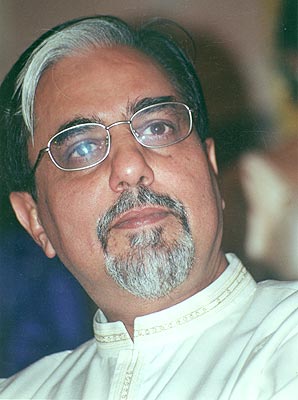
Here's something not many people know about Subhash Chandra Goel: The Zee chairman dropped out after standard 12.
Subhash Chandra started his own vegetable oils unit at 19. It was, in a manner of speaking, his first job. Years later, a casual visit to a friend at Doordarshan gave him the idea of starting his own broadcasting company. We all know how that story ran.
Chandra knew nothing about programming, distribution or film rights. What he did understand quite well was the Indian sensibility though. Funded by UK businessmen, Zee came into being as India's first satellite TV network.
Today, it reaches 32 million homes, connecting with 200 million people in South Asia alone. The network also covers Asians in America, the Middle East, Europe, Australia and Africa, making this dropout a very rich one.
Michael Dell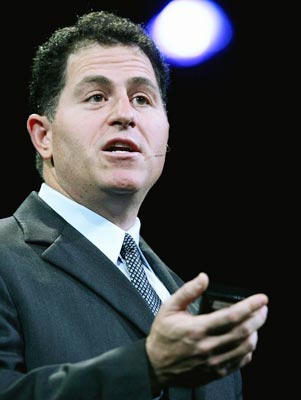
Michael Saul Dell (1965-) joined the University of Texas at Austin with the intention of becoming a physician. While studying there, he started a computer company in his dormitory, calling it PC's Limited. By the time he turned 19, it had notched up enough success to prompt Dell to dropout.
In 1987, PC's Limited changed its name to Dell Computer Corporation. By 2003, Dell, Inc. was the world's most profitable PC manufacturer.
Dell has won more than his fair share of accolades, including Man of the Year from PC Magazine and EM>CEO of the Year from Financial World. Forbes, in 2005, lists him as the 18th richest in the world with a net worth of around $16 billion. Not bad for just another dropout.
Steve Jobs
Steven Paul Jobs (1955-) and Apple Computer are names that have long gone together.
Born in the United States to an unknown Egyptian-Arab father, Jobs was adopted soon after birth. After graduating high school, he enrolled in Reed College, dropping out after one semester.
In 1976, 21-year-old Jobs and 26-year old Steve Wozniak founded Apple Computer Co. in the family garage. Jobs revolutionised the industry by popularising the concept of home computers.
By 1984, the Macintosh was introduced. He had an influential role in the building of the World-Wide Web, and also happens to be Chairman and CEO of Pixar Animation Studios.
Today, with the iPod, Apple is bigger than ever. Incidentally, Jobs worked for several years at an annual salary of $1. It got him a listing in the Guinness Book as `Lowest Paid Chief Executive Officer.' He was once gifted a $90 million jet by the company though. And his net worth? Moer than $3 billion.
Dhirubhai Ambani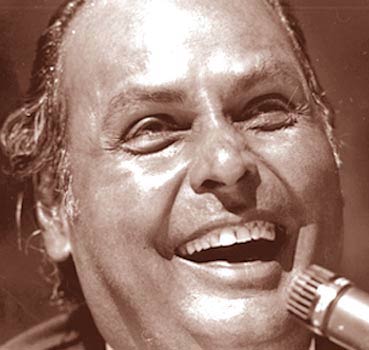
Dhirajlal Hirachand Ambani (1932-2002) was born into the family of a schoolteacher. It was a family of modest means. When he turned 16, Dhirubhai moved to Aden, working first as a gas-station attendant, then as a clerk in an oil company.
He returned to India at 26, starting a business with a meagre capital of $375. By the time of his demise, his company - Reliance Industries Ltd - had grown to become an empire, with an estimated annual turnover of $12 billion!
Dhirubhai was, in his lifetime, conferred the Indian Entrepreneur of the 20th Century Award by the Federation of Indian Chambers of Commerce and Industry. A Times of India poll in the year 2000 also voted him one of the biggest creators of wealth in this century.
Dhirubhai's is not just the usual rags-to-riches story. He will be remembered as the one who rewrote Indian corporate history and built a truly global corporate group. He is also credited with having single-handedly breathed life into the Indian stock markets and bringing in thousands of investors to the bourses.
Larry Ellison
Lawrence Joseph Ellison (1944-), co-founder and CEO of Oracle Corporation, founded his company in 1977 with a sum of $2,000. Once a school dropout, he is now, according to Forbes, one of the richest people in America with a net worth of around $18.4 billion. The figure also makes him the ninth richest in the world.
As a young man, Ellison worked for the Ampex Corporation, where one of his projects was a database for the CIA. He called it Oracle, a name he was to reuse years later for the company that made him famous.
Interestingly, the organisation's initial release was Oracle 2. The number supposedly implied that all bugs had been eliminated from an earlier version.
Ellison is quite a colourful man, and has long dabbled in all kinds of things. Want to learn more? Try his biography, The Difference Between God and Larry Ellison.
Richard Branson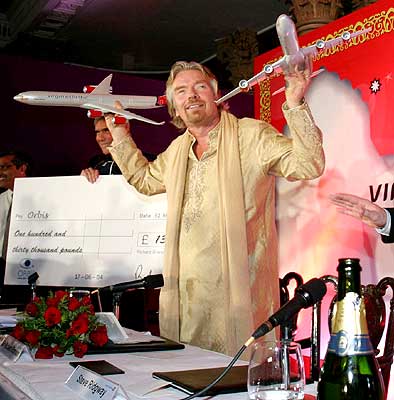
British entrepreneur Sir Richard Branson (1950-) is known for the Virgin brand, one that has seen success in all kinds of ventures.
His tale begins in 1970, the year he started a record mail order. A record shop in London came next, followed by the launch of Virgin Records in 1972. Virgin Atlantic Airways was formed in 1984, and Virgin Mobile launched in 1999.
Another thing this businessman is known for is his eccentric promotional habits. He has made a number of attempts, unsuccessfully, to fly around the world in a hot air balloon! In 2004, Virgin Galactic was launched -- to take passengers into sub-orbital space.
Brandon supposedly considered running for Mayor of London in 2004, but decided not to. When the 2002 list of 100 Greatest Britons was announced, he stood tall at Number 85.
Tuesday, March 07, 2006
Thomas Jefferson's 10 Rules
1)Never put off till tomorrow what you can do today.
2)Never trouble another for what you can do yourself.
3)Never spend your money before you have it.
4)Never buy what you do not want because it is cheap; it will never be dear to you.
5)Pride costs us more than hunger, thirst, and cold.
6)Never repent of having eaten too little.
7)Nothing is troublesome that we do willingly.
8)Don't let the evils which have never happened cost you pain.
9)Always take things by their smooth handle.
10)When angry, count to ten before you speak; if very angry, count to one hundred.
Saturday, March 04, 2006
A few more thoughts........
-
Treasure your relationships. After all, people are the source of our power. Every relationship we nurture empowers us, and every relationship we sever weakens us. So, the more we get along with people the greater our power.
-
We learn from others. EVERYONE has something to teach us. Look for it. Find it. Recognize it. And act on it.
-
The people we work with act as our allies. When you joined the church committee, you had the opportunity to multiply your power and service to others.
-
Our relationships can provide a source of comfort, strength, and inspiration.
-
The faults of those we interact with remind us of our own, and provide us with opportunities to practice patience, understanding, acceptance, and forgiveness.
-
Our relationships serve as a practice ground where can develop our character. Where else can we learn the art of disagreeing without being disagreeable?
-
When we serve others, we serve ourselves. For example, when you help others, they hold you in esteem. And it is the esteem of others that develops your self-esteem.
-
When you get along with others you end stress, share in laughter, and gain peace of mind.
-
Most people are decent, and conflicts are generally caused by misunderstandings. Those who are unkind are usually insecure, feel threatened, are afraid, and lack confidence. Instead of a cold shoulder, they need a shoulder to cry on. Instead of a punch in the face, they need a pat on the back.
-
Remember that people don't care how much you know until they know how much you care.
-
Here's a useful tip from. Dag Hammarskjold (1905 ~ 1961), "An apology is a friendship preserver, is often a debt of honor, is never a sign of weakness, is an antidote for hatred, costs nothing but one's pride, always saves more than it costs, is a device needed in every home."
-
View everyone you meet as an opportunity to experience God. Do this by experiencing His Love and freely and unconditionally offer it to all.
-
Don't let pride destroy a relationship, for as Reuel Howe wrote, "Indeed, this need of individuals to be right is so great that they are willing to sacrifice themselves, their relationships, and even love for it."
Saturday, February 25, 2006
Welcome to Jason's blogging world
Hi people,
Always wanted to start this............finally i'm being born into the bloggers world.
So hopefully this will be the place where i will come and voice out all the things i feel about anything and everything under the sun.............
Here are 10 tips for a happier life
-
Don’t worry
Worry is the least productive of all human activities and thoughts…. -
Don’t let needless fears preoccupy your life...
Most of things we fear never happen!!! . -
Don’t hold grudges...
That is one of the biggest and most unnecessary weights we carry through our lives.. -
Take on one problem at a time
It’s the only way to handle things anyway..one by one.. -
Don’t take your problems to bed with you.
They are bad and unhealthy companions for good natural sleep and rest... -
Don’t take on the problems of other people..
They are better equipped to handle their own problems than you are.. -
Don’t live in the past.
It will always be there in your memories to enjoy..but don’t cling to it. Concentrate on what is happening right now in your life..and you will be happy in the present also..not just the past. -
Be a good listener.
It is only when one listens..that one gets and learns ideas different from ones own... -
Do not let frustration ruin and rule your life...
Self pity more than anything..interferes with positive actions..with moving forwards in our lives. -
Count your blessings...
Don’t even forget the smallest blessings.. As many small blessings add up to large ones...
A story for u.... Nice one to start the day...
An elderly carpenter was ready to retire. He told his employer contractor of his plans to leave the house building business and live a more leisurely life with his family. He would miss the paycheck, but he needed to retire. They could get by.
The contractor was sorry to see his good worker go and asked if he could build just one more house as a personal favour. The carpenter said,"yes", but in time it was easy to see that his heart was not in his work. He restored to shoddy workmanship and used inferior materials. It was an unfortunate way to end a dedicated career.
When the carpenter finished his work, the employer handed the front-door key to the carpenter. "This is your house," he said, "my gift to you". The carpenter was shocked! What a shame! If he had only known he was building his own house, he would have done it all so differently.
So it is with us. We build our lives, a day at a time, often putting less than our best into the building. Then with a shock we realise we have to live in the house we have built.
We are the carpenters. Life is a do-it-yourself project someone has said. Our attitudes and the choice that we make today, build the house we will live in tomorrow. Build Wisely.
Remember:WORK LIKE WE DON'T NEED THE MONEY,
LOVE LIKE WE HAVE NEVER BEEN HURT,
DANCE LIKE NOBODY IS WATCHING!!!!
IF A JOB'S WORTH DOING,
IT'S WORTH DOING WELL!!
